
 A young linguist returns to her grandmother's village and discovers that the crows have been keeping records of everything the family has ever said.
The Owl Who Learned to Count
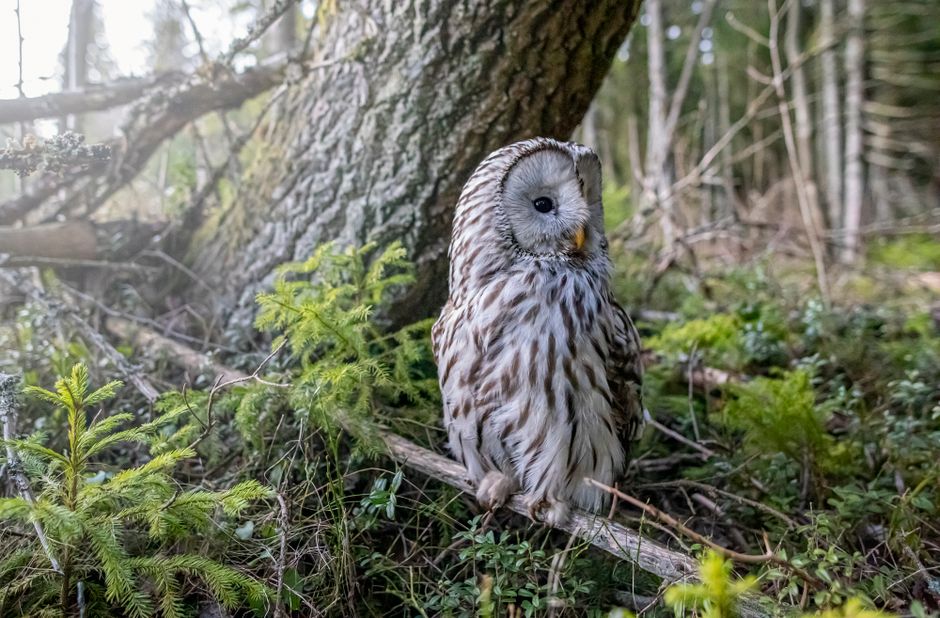
The owl's name, as far as she had one, was the sound her mother made when calling her back to the nest. It was not a word so much as a small crease in the night, a two-note question. She had heard it a thousand times before she understood that it meant her.
She was the smallest of three, and the slowest to fledge. Her brothers left the nest in the first warm week of May, tumbling into the dark with the confidence of creatures who had not yet learned to be afraid. She stayed. She watched. And watching, she began to notice something the others had missed.
The forest had a pattern. Not just the obvious ones, the tide of dawn and dusk, the drift of the seasons. Something finer. The voles moved in little bursts, three or four heartbeats of rustle, then stillness. The moths came out in waves. Even the wind seemed to pause at intervals, as if the whole wood were breathing in and holding it.
The Rhythm Under the Noise
Her mother hunted by sound, as all owls do, but she hunted by something else too. She would tilt her head, wait, and then drop, and always at the moment when the small sounds of the undergrowth fell quiet. The owl watched this for many nights before she understood: her mother was not listening for the prey. She was listening for the pause before the prey, the tiny silence that meant something was holding still and hoping not to be noticed.
It was a kind of counting, though she did not have a word for it. One for the rustle. Two for the hush. Three for the leap.
She practiced on the branch outside the nest, where a family of field mice lived under the roots of an old oak. At first she was clumsy. She mistook the wind for a mouse, the mouse for the wind. But night after night she got better, and by midsummer she could feel the pause coming the way you feel a sneeze before it arrives.
Her brothers, meanwhile, were having a harder time of it. They hunted by sight and by hunger, and hunger is a poor teacher. They caught what they could and missed what they could not, and by autumn one of them had drifted off to a hedgerow further south, and the other had grown thin and quiet and did not visit the nest anymore.
What the Forest Taught Her
The owl stayed. She raised two broods in the same oak her mother had used, and she taught them what she had learned: that the forest is not a place of noise but of intervals, and that the creature who listens for the gaps will always eat before the creature who listens only for the sound.
She never had a name for it. Owls do not name things. But if you sit under that oak on a still night in late summer, you can hear her descendants practicing. The rustle. The hush. The leap. Three beats, over and over, passed down from a small slow chick who once stayed behind in the nest and watched instead of leaving.
The forest, it turns out, has always been counting. Most of us just never learned the language.