
 Every spring the swallows return to the same eave, and every spring the village remembers a promise made during a war.
The Nightjar's Lullaby
Old Maren had walked the same heath for forty years, and in all that time she had never once seen the bird that sang her to sleep. She knew its voice the way she knew her own heartbeat — a low, mechanical churr that started at dusk and rolled on through the dark like a spinning wheel that never ran out of wool. The villagers called it the goatsucker, and they said it drank milk from the herds by night, though Maren had never seen a goat look troubled by it. She only knew that when her husband died in the spring, the churring came closer to her cottage than it ever had before, and it sounded, somehow, like him clearing his throat before a story.
She did not tell anyone this. Grief makes liars of us all, she thought, or else it makes us honest in ways no one wants to hear. But each evening she sat on her doorstep with her tea going cold, and each evening the nightjar sang from the gorse, and each evening she felt a little less alone.
The Bird That Wears the Dark
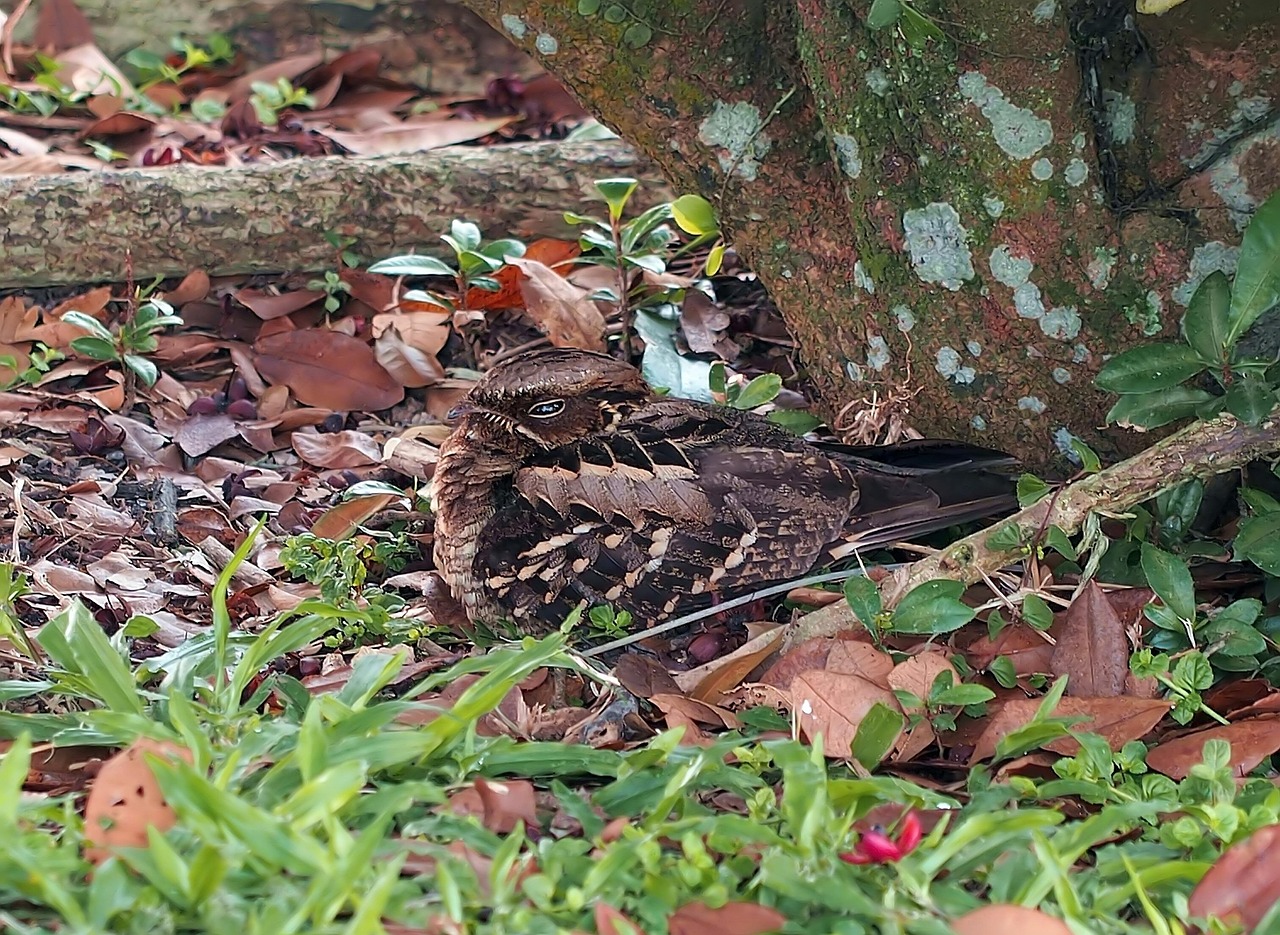
Nightjars are strange creatures even by the standards of birds. They have soft, mottled plumage the colour of bark and stone, whiskers around their wide mouths to help them catch moths on the wing, and eyes that reflect light like a cat's. By day they sit lengthwise on a branch, looking so much like a broken piece of wood that you could pass within arm's reach and never notice. By night they become something else entirely — a shape that flickers at the edge of a fire's light, a voice that seems to come from everywhere and nowhere at once.
The old stories say the nightjar is a bird of thresholds. It belongs neither to day nor to night, neither to the world of the living nor the world of the dead. In some tellings it is a soul in feathered form, waiting for someone to remember its name so it can finally rest. In others it is a guardian, posted at the door between what we can see and what we cannot, singing the only song it knows to keep the frightened company.
Maren did not care much for stories. She cared for the sound. She began to notice that the churring changed depending on her mood — faster when she was restless, slower when she was calm, and once, on the anniversary of her husband's death, it stopped entirely for a full minute, as if the bird itself were holding its breath with her.
What the Heaths Keep
One evening in late summer, a young woman came to Maren's door asking about the bird. She was a naturalist, she said, from the university, and she was studying nightjar populations on the heath. She had a notebook and a headlamp and a great many questions. Maren made her tea and answered what she could, and when the churring began at dusk, the young woman fell silent and listened with her whole body.
"It sounds like a machine," she said at last. "Like something winding down."
"It sounds like someone I knew," Maren said, and the young woman did not laugh or look away. She wrote something in her notebook, and Maren suspected it was not a scientific observation at all.
They sat together until the churring faded and the heath went quiet. The young woman thanked her and walked back toward the village with her headlamp bobbing like a small, determined moon. Maren stayed on the step a while longer, listening to the wind in the gorse, and when she finally went inside, she left the door open a crack — just in case the bird wanted to come in, or just in case something else did.
The nightjar returned the next evening, and the next, and the next after that. Maren never saw it. She never needed to. Some songs are meant to be heard, not held, and some company arrives in the dark and asks for nothing but a listening ear. When she died, years later, the villagers said the churring stopped for a full week, and then began again in a new place, closer to the churchyard, as if the bird had simply moved house and taken its lullaby with it.