
 A young tawny owl discovers that the forest has a rhythm, and that listening for it changes everything.
The Robin in the Snow
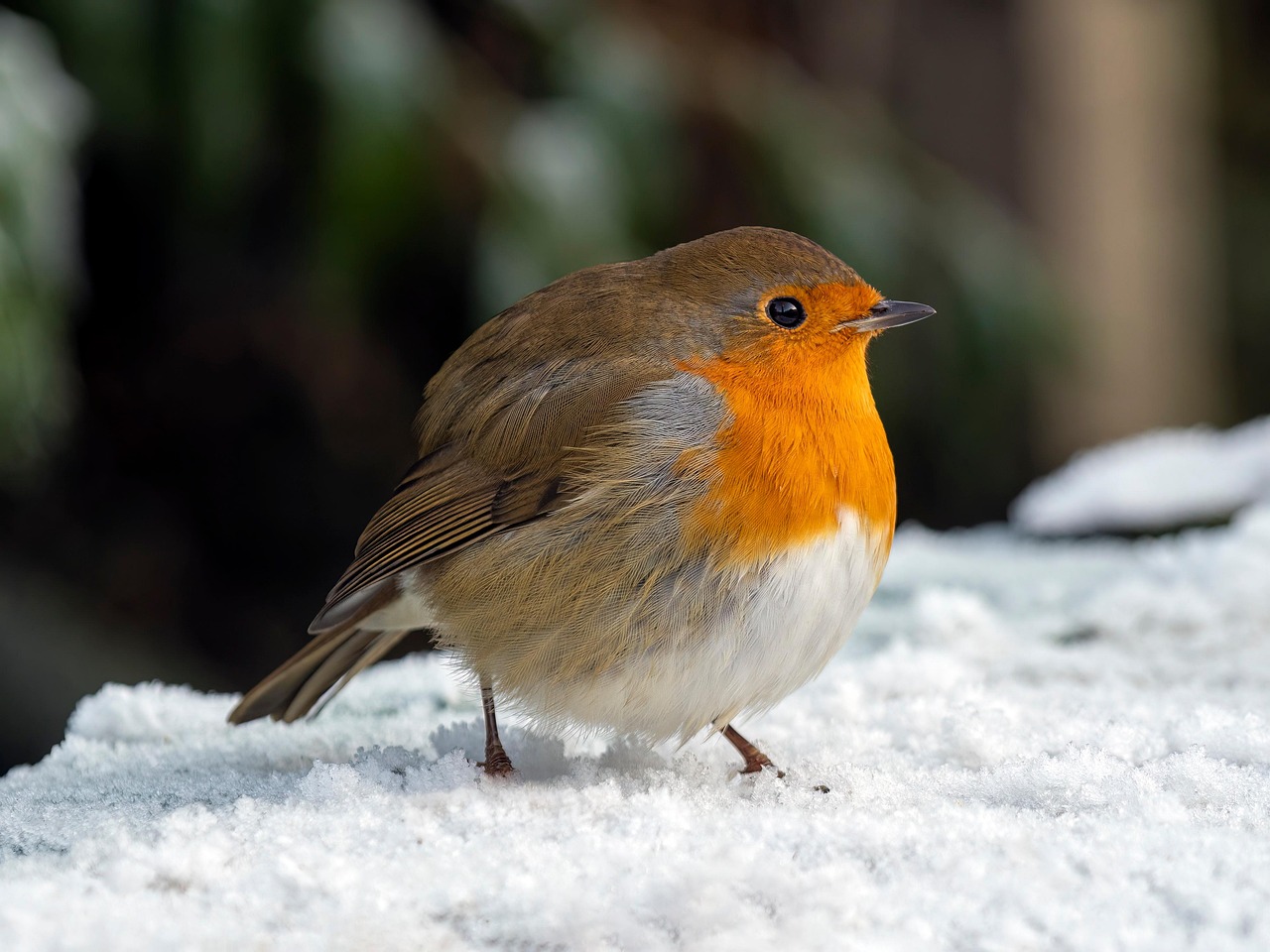
The snow came early that year, and it came hard. By the time Edith woke on the first morning of December, the world outside her window had been rewritten — every hedge and fence post and bare branch softened into something unfamiliar, something that belonged to a different story than the one she had been living. She had been living alone for three years now, and she had grown used to the quiet, but snow quiet was different. Snow quiet was the kind of quiet that made you listen for things that weren't there.
She made her tea and stood at the kitchen window, watching the flakes fall. And then she saw it — a small, round shape on the sill outside, feathers puffed against the cold, a bright red breast like a coal that had refused to go out. The robin looked at her through the glass with one black eye, and Edith, who had not spoken to another living creature in four days, said, "Well. Hello."
The robin did not fly away. It tilted its head, as if considering her, and then it hopped closer to the window, leaving tiny footprints in the snow.
The Smallest of Visitors
Robins are not, as many people believe, exclusively winter birds. In Britain and much of Europe, they are year-round residents, defending their territories with a fierce and surprisingly loud song. But something about their appearance in winter — that flash of red against the grey and white — has made them a symbol of comfort in the coldest months. The old stories say the robin got its red breast from tending the fire in Bethlehem, or from pulling a thorn from the crown of Christ, or from singing to a dying man on a cold night. The details vary, but the theme is always the same: the robin is a bird that shows up when things are hard, and it brings what warmth it can.
Edith did not know these stories. She only knew that the robin kept coming back. Every morning, it appeared on the sill, and every morning, she found herself talking to it — about the weather, about the neighbours, about her husband, who had loved birds and had once spent an entire summer building a bird table that the squirrels had immediately claimed. She told the robin things she had not told anyone. She told it that she was lonely. She told it that she was tired. She told it that she did not know how to be a person in the world without someone else to be a person with.
The robin listened. Or at least, it did not leave.
What the Winter Taught Her
One morning, Edith put out a handful of mealworms on the sill, and the robin ate them while she watched. The next morning, she put out more. By the end of the week, she had bought a small bag of bird food from the shop in the village, and by the end of the month, she had hung a feeder from the branch of the apple tree and was keeping a list of every bird that visited. There were blue tits and great tits and a pair of chaffinches and, once, a fleeting visit from a woodpecker that made her gasp out loud.
The robin, of course, remained her favourite. It was the first. It was the one who had arrived when she needed it most, and it stayed through the worst of the winter, through the storms and the frosts and the long, dark nights. When spring came, it began to sing — a clear, liquid song that seemed to fill the whole garden — and Edith stood at her window and listened and felt, for the first time in a long time, that the world was not as empty as it had seemed.
She never named the robin. That felt like too much, somehow, like claiming something that was not hers to claim. But she thought of it as a friend, and she liked to believe it thought of her the same way. Some company is like that — small, unassuming, arriving when you least expect it, asking for nothing but a little food and a little warmth. And sometimes, that is exactly enough.