
 After a winter storm, a lonely widow finds an unexpected visitor at her window and discovers that company can arrive in the smallest of packages.
The Swallows of the White Church
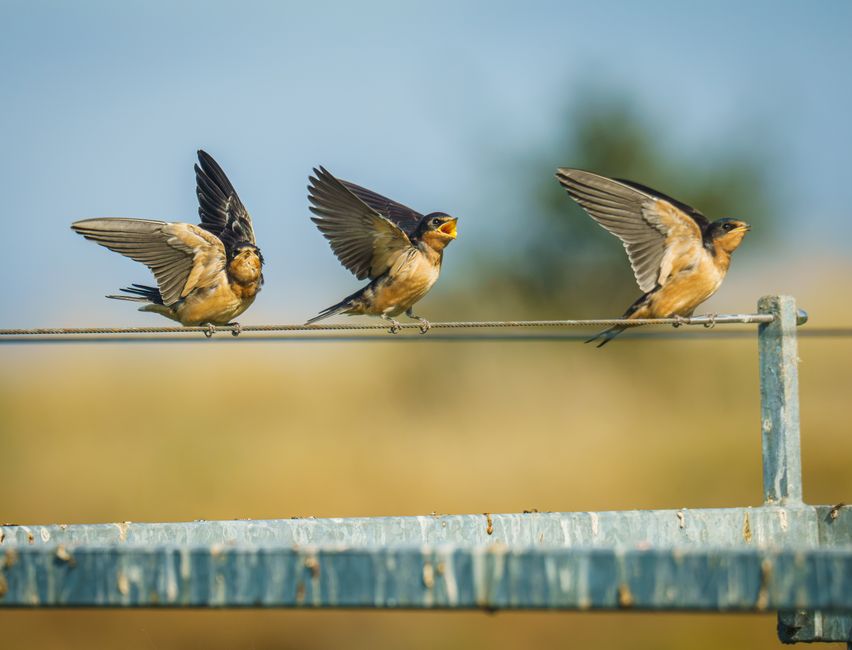
The church at Aldercombe has no bell. It lost it in a storm in 1743, or so the story goes, and the village never replaced it, because by then they had found another way to mark the hours. The swallows. Every year, on or about the fourteenth of April, the first pair arrived at the south eave, and every year the village knew that spring had come to stay.
You could set a plough by them. You could set a wedding by them. The old women said that a child born on the day the swallows returned would never be lost, and the old men said that was nonsense, and then quietly noted the date of their own grandchildren's births in the parish register, just in case.
But the swallows were not always faithful. There was one spring, in the middle of the last century, when they did not come.
The Year the Sky Stayed Empty
The war had been over for two years, but the village was still thin. Rationing lingered. The young men who had gone away had mostly come back, though not all of them, and the ones who had come back did not always talk about it. The south eave of the church had been damaged by a stray piece of shrapnel, and the plaster was gone, and there was no money to fix it.
April came. The fourteenth passed. The eighteenth. The twenty-fifth. The village began to worry in the quiet way that villages worry, which is to say they mentioned it to each other constantly and said nothing at all to outsiders. The vicar, a young man named Hollis who had been a chaplain in the war and did not believe in omens, found himself standing in the churchyard every morning at dawn, scanning the sky.
On the third of May, a girl named Ellen Marsh, who was eleven and had lost her father in the war, took a bucket of plaster and a trowel from her mother's shed and walked to the church. She had watched the men patch the wall of the village hall the previous autumn. She had paid attention. She mixed the plaster the way she had seen them do it, and she climbed a ladder that was too tall for her, and she filled the hole in the eave.
It took her three days. Her hands were raw. Her mother was furious and then, seeing the ladder, and the plaster, and the small determined face, was not.
The Fourteenth of April
The swallows came back the following spring, on the fourteenth of April, as they always had. They nested in the new plaster. The village, which had never quite known what to make of Ellen Marsh, decided that she was a person to be reckoned with, and she was, and she lived in Aldercombe her whole life.
The plaster is gone now. The church is a ruin, kept up by a trust, with a wooden roof and no windows. But the swallows still come. Every fourteenth of April, a pair arrives at the south eave, which is no longer an eave but a gap in the wall, and they build a nest in the roofless nave, and the village walks up the hill to watch.
They say the birds remember the place. But the older villagers will tell you it is the other way around. The place remembers the birds, and the girl who fixed the wall so they would have somewhere to come home to. Some promises are kept by people. Some are kept by swallows. The trick is not confusing the two.